If your drains are slow, your yard smells, or water is pooling above the drain field, your septic system is telling you something. The most common warning signs are multiple slow drains, sewage odors indoors or outdoors, standing water near the drain field, unusually green grass over the system, gurgling plumbing, wastewater backups, and drainage problems that keep coming back. Those symptoms are worth addressing before winter, because frozen ground, snow cover, and limited access make inspection and excavation harder once the cold sets in.
This guide walks through each sign, how urgent it usually is, and what you can safely check yourself. It is written for homeowners around Arkansaw, Durand, Eau Claire, and Menomonie who rely on a private system and want a straight answer about whether they need septic system repair in Western Wisconsin or simply routine maintenance.
Not Sure How Serious the Problem Is?
Gunderson Plumbing & Concrete can inspect the system and explain whether it needs maintenance, repair, drain-field work, or replacement.
Is Your Septic Problem Urgent?
Select everything you are noticing. The checker will suggest how quickly the system should be looked at.
Seven Septic System Warning Signs Wisconsin Homeowners Should Not Ignore
Each sign below includes what it usually means and how quickly it deserves attention.
1. Multiple Drains Are Moving Slowly
A single slow sink is usually a local problem — hair in a trap, grease in a branch line, a partially blocked vent. You clear it, and the fixture behaves again. That is a plumbing repair, not a septic red flag.
It is different when the kitchen sink, the basement shower, and an upstairs toilet all start draining slower over the same few weeks. When everything downstream of the house slows down together, the restriction is usually shared: the main line to the tank, a clogged effluent filter, a tank that is overdue for pumping, or a drain field that is no longer accepting water at a normal rate.
- Tubs and showers drain visibly slower than they used to
- Toilets need a second flush or refill sluggishly
- Laundry water backs up briefly into a floor drain
- A partial blockage in the main sewer line
- A full tank or a clogged effluent filter
- Reduced absorption in the drain field
Schedule an inspection once two or more fixtures are affected, or if clearing one drain does not hold for long. Slow whole-house drainage rarely fixes itself, and it is far easier to diagnose in September than in January.
2. Toilets and Drains Are Gurgling
Gurgling is the sound of air moving where water should be. When wastewater flow is restricted somewhere downstream, air gets trapped and then pulled through traps and standing water — you hear it as bubbling in a toilet bowl or a glugging noise in a nearby drain after the washing machine empties.
Occasional gurgling can come from a blocked plumbing vent, which is a simpler fix. Persistent gurgling that shows up across multiple fixtures, especially alongside slower drainage, is more often a sign that the line, tank, or field is struggling to move water through.
Note when it happens and which fixtures make the noise. If it becomes routine, or you also notice odor or slow drainage, move it up your list rather than living with it.
3. You Notice Sewage Odors Indoors or Outside
A healthy septic system should be effectively odorless from the house and the yard. When you can smell it, gas or wastewater is escaping somewhere it should not.
Indoors, sewage odor near a floor drain, a rarely used bathroom, or a laundry sink often points to a dry trap or a venting issue — but it can also mean sewer gas is backing up because of a restriction. Outdoors, a sewage smell around the tank lid, the inspection ports, or the drain field can indicate a damaged lid, a cracked component, an overloaded tank, or effluent working its way to the surface.
Odor is one of those symptoms homeowners tend to normalize after a few weeks. Do not. A persistent sewage smell is the system asking to be looked at, and it is easy to check while the ground is still open and workable.
4. Standing Water Appears Near the Drain Field
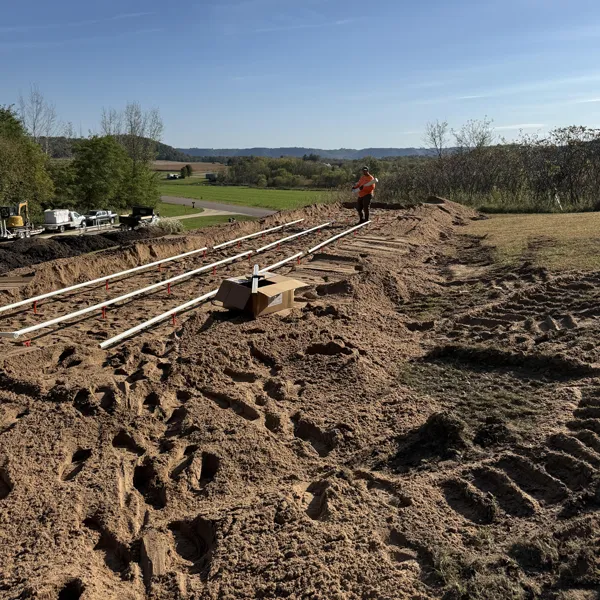
Soggy ground, spongy turf, or visible pooling over the drain field usually means wastewater is not being absorbed at the rate the system is producing it. The soil may be saturated from a failing field, a hydraulic overload, a broken distribution line, or surface water draining into the area.
Assume any surfacing water in that area is untreated wastewater. Keep children and pets off it, do not mow through it, do not drive over the saturated soil, and cut back household water use until the system has been evaluated.
This one earns a prompt call. Surfacing effluent is both a health concern and a sign the field is at or past its limit — and drain-field work is dramatically harder once the ground freezes.
5. Grass Above the System Is Unusually Green
A stripe of lawn that is greener, thicker, or growing faster than everything around it is a classic tell. Extra moisture and nutrients from effluent are reaching the root zone at a level the rest of your yard is not getting.
During a dry Wisconsin August, this can be the very first visible clue — the lawn browns out everywhere except directly over the tank or the lateral lines. On its own it is not an emergency, but paired with any odor, slow drainage, or soft soil, it strengthens the case for a professional look.
Walk the area after a dry stretch and note where the green pattern sits. That layout is genuinely useful information for whoever inspects the system.
6. Sewage Is Backing Up Inside the Property
Wastewater coming up into a tub, shower, floor drain, or lower-level fixture is the most serious sign on this list. It means the system can no longer move water away from the house, and the path of least resistance is now back into your living space.
Backups tend to show up first at the lowest fixtures in the house. Once that starts, every load of laundry and every shower makes it worse.
If sewage is entering the property, avoid contact with the wastewater, limit water use, keep children and pets away, and call a professional for current availability.
7. The Same Plumbing Problems Keep Returning
If you have had a drain cleared two or three times and the same backup or slow drainage returns within weeks or months, the cleaning is treating a symptom rather than the cause.
Recurring problems commonly trace back to a sewer line issue — a belly, a root intrusion, a crack, a collapsed section — or to the septic side: a clogged filter, a tank that needs service, a failing baffle, or a drain field losing capacity. Repeated cleanings add up quickly compared with diagnosing the cause once.
This is the point to ask for a real evaluation of the whole system, from the fixtures through the line, the tank, and the field, so the next repair is the one that lasts.
What Homeowners Can Check Safely
You can gather a lot of useful information before anyone arrives — all of it from a safe distance. Everything below is non-invasive and makes the inspection faster.
- Determine whether one fixture or multiple fixtures are affected
- Note when the problem started and what makes it worse
- Look for standing water without touching it
- Reduce unnecessary water use — laundry, dishwasher, long showers
- Check whether recent heavy rain may have saturated the property
- Gather maintenance and pumping records
- Take photographs from a safe distance
- Avoid opening the septic tank
- Avoid chemical drain products unless a professional recommends them
- Do not drive or park over the tank or drain field
Never enter a septic tank and never handle wastewater. Tank gases can be fatal within seconds, and lids can fail without warning. Leave everything below the lid to a licensed professional with the right equipment.
Does the Septic System Need Repair or Replacement?
Most homeowners assume the worst. In practice, the answer depends on what failed and how long it has been failing.
The system may need maintenance or repair
- Clogged filter or line
- Damaged accessible component
- Isolated drainage issue
- Deferred maintenance
- A problem identified early
The system may require major repair or replacement
- Failing or saturated drain field
- Severely damaged tank
- Repeated whole-house backups
- An undersized or outdated system
- Repairs no longer provide lasting results
Only an on-site inspection can determine the actual condition of the septic tank, lines, components, and drain field. We would rather tell you the tank is fine and the filter needed cleaning than sell you a system you do not need — see our septic and excavation solutions for what that work involves.
Why Septic Problems Should Be Addressed Before a Wisconsin Winter
A septic inspection before winter is the single easiest piece of Wisconsin septic maintenance to schedule and the one most often skipped. Western Wisconsin septic repair gets meaningfully harder between the first hard freeze and spring thaw, and winter septic-system problems tend to arrive at the worst possible moment.
Once frost sets in, opening the ground over a tank or lateral field takes more equipment, more time, and more cost than the same job in September.
Snow cover conceals soggy soil, surfacing effluent, and the green-growth patterns that make a drain-field problem obvious in warm weather.
Guests, extra laundry, and back-to-back showers push far more water through the system in a short window than a normal week.
A marginal system that copes in October can back up during a January cold snap, when it is hardest to get anything fixed quickly.
Deep snow, drifting, and frozen lids make it more difficult to reach risers, ports, and tank components for even a routine check.
Finding an issue in late summer or fall gives you time to compare repair approaches instead of making a decision under pressure.
Septic System Services Across Western Wisconsin
We work out of Arkansaw and cover roughly a 70-mile radius from there, which puts most of Pepin, Dunn, Eau Claire, Chippewa, Pierce, and St. Croix counties inside our normal range — plus the surrounding rural communities in between.
- Arkansaw
- Eau Claire
- Menomonie
- Durand
- Altoona
- Chippewa Falls
- River Falls
- Mondovi
Check the full Gunderson service area map to confirm coverage, or browse our professional septic-system services. Slow drains that are not septic-related may need professional plumbing repair in Eau Claire. We also handle utility trenching in Western Wisconsin alongside septic work, and you can see finished jobs in the project gallery.
Schedule Your Septic System Inspection
Send the details below and we will reach out to discuss the property and next steps. This is an inspection request — we confirm timing with you directly.
Frequently Asked Questions
Don't Wait for a Small Septic Problem to Become an Emergency
If you have noticed slow drains, sewage odors, gurgling fixtures, standing water, or other warning signs, schedule an inspection with Gunderson Plumbing & Concrete. Our licensed team serves homeowners throughout Eau Claire, Menomonie, Arkansaw, Durand, and Western Wisconsin — the trusted choice for septic system repair in Western Wisconsin.
Free, no-obligation estimates. Call for current service availability.